
Pest Control In Frederica — Same Day Frederica Exterminators
Need fast and reliable pest control in Frederica, DE? Delaware Pest Pros provides same-day exterminator services for rodents, termites, bed bugs, ants, spiders, and more. Our Frederica pest control experts deliver guaranteed results with safe, eco-friendly treatments for local homes and businesses.


Pest Control Costs in Frederica, Delaware: What You Can Expect to Pay
The average cost of pest control in Frederica, DE typically ranges from $180 to $320 for standard residential services. Located in Kent County, Frederica has a humid, semi-coastal environment, which increases pest activity — especially mosquitoes, termites, ants, and rodents.
| Service | Average Cost |
|---|---|
| Ant Control | $160 – $300 |
| Rodent Control | $180 – $320 |
| Spider Control | $150 – $260 |
| Cockroach Control | $150 – $290 |
| Termite Control | $700 – $1,550 |
| Bed Bug Treatment | $450 – $950 |
| Mosquito Control | $120 – $260 per treatment |
| Wasp & Hornet Removal | $140 – $320 |
| Flea & Tick Control | $160 – $320 |
| Commercial Pest Control | $350 – $900 (depending on property) |
| General Pest Inspection | $80 – $200 |
Your Local Frederica Pest Control Experts
Frederica sits in Kent County on the bend of the Murderkill River, 6 miles from Delaware Bay. The town has been here since 1772. It was built on navigable tidal water surrounded by wetlands — and that wetland character has never changed. Locals have called Frederica "Frogtown" for generations because of the large frog and wetland populations surrounding the community. The nickname still appears on the fire company trucks today. The marsh surrounding the Murderkill River to the south of town is so present that residents notice its strong odor on hot summer days. Roads leading out of town to Delaware Route 1 flood regularly during high tides and heavy rains.
The Murderkill River is tidally influenced all the way up to Frederica. The U.S. Army Corps of Engineers maintains a navigation channel from Delaware Bay to Frederica for commercial and recreational use. Between Frederica and Bowers Beach, 1,200 hectares of tidal marsh line the river corridor. Official government documents specifically name Frederica when describing the salt-marsh mosquito problem — stating that mosquitoes breeding on several hundred acres of tidal wetlands cause extreme annoyance to Frederica residents. These species can transmit encephalitis to humans and heartworms to dogs.
Killens Pond State Park's 1,686 acres and Andrews Lake border Frederica to the west. The Murderkill watershed is 55% agricultural land — grain and poultry operations surrounding the town on every inland approach road. The Frederica Historic District, listed on the National Register of Historic Places, preserves original construction from the 1700s and 1800s throughout the historic downtown core.
We know Frederica specifically. We build every treatment plan around its tidal marsh reality.
Pests We Control And Exterminate In Frederica

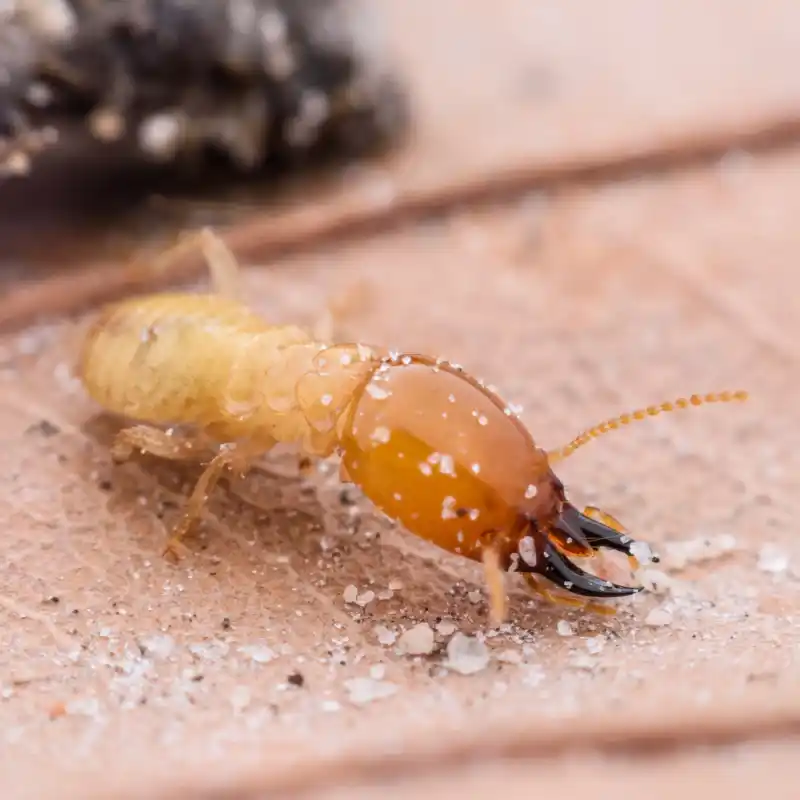
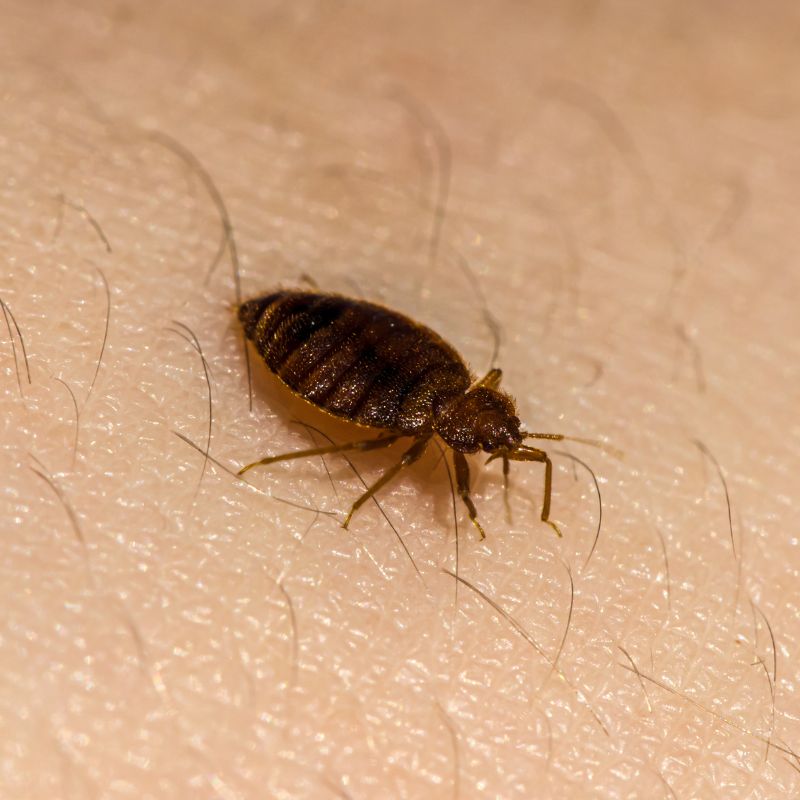
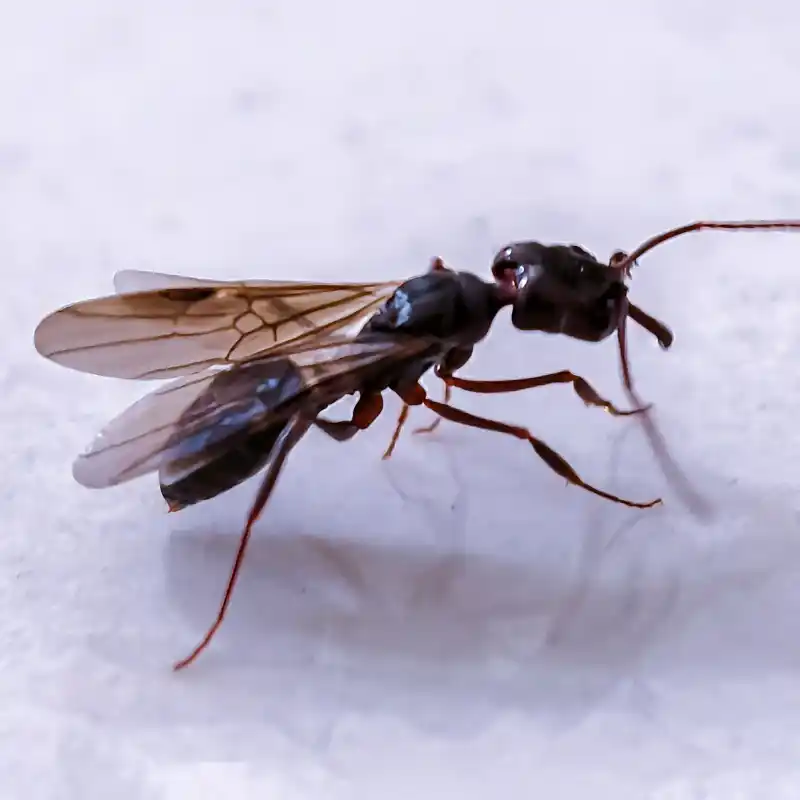

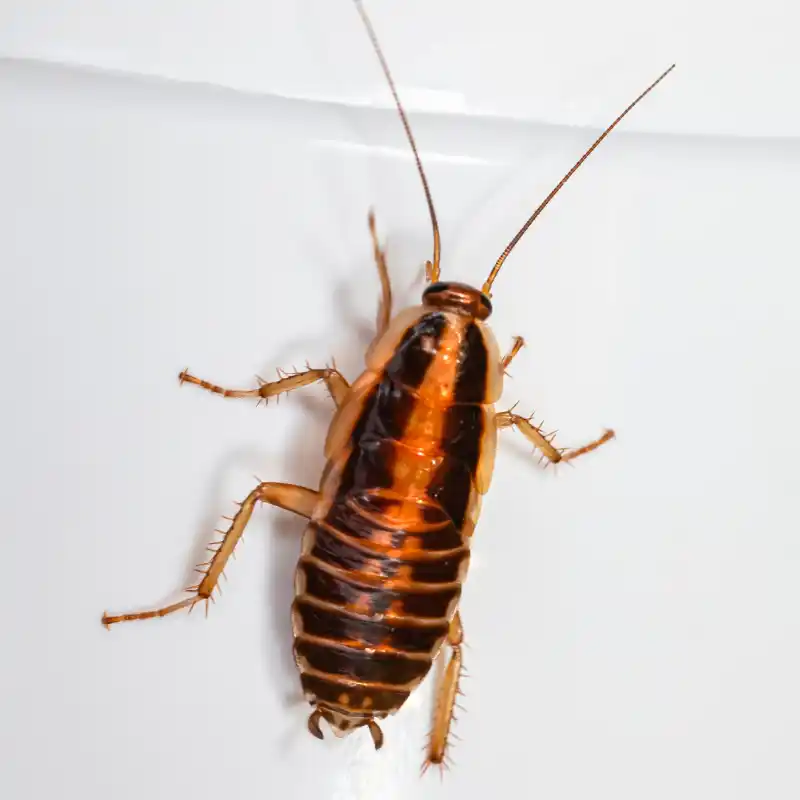

Rodent Control Frederica (Mice & Rats)
Frederica’s rodent pressure comes from two directions. The Murderkill tidal marsh corridor on the southern edge sustains Norway rat populations in permanently wet riparian vegetation along the river’s edge — tidal marshes generate the food, harborage, and water conditions that sustain large rat populations year-round regardless of season. The surrounding Murderkill watershed’s agricultural fields — 55% of the total watershed is farmland — drive harvest-season field mouse migration into Frederica’s residential streets every October when surrounding grain operations begin. Frederica’s historic downtown properties, some with foundations going back to the 1772 original survey, have original sill plate gaps and crawl space voids that field mice and Norway rats reach easily once they move toward the town from both the tidal marsh corridor and the surrounding farm fields.
The Damage Rodents Cause
Rats and mice chew through wiring, insulation, and structural wood. They contaminate food and spread disease including salmonella and leptospirosis. In Frederica’s oldest historic downtown properties, original foundations with never-repaired gaps give rodents easy access once they reach the perimeter from either the Murderkill tidal marsh corridor or surrounding agricultural fields.
Our Rodent Control Solution
Delaware Pest Pros — your trusted mice and rat exterminator in Frederica — deploys tamper-resistant exterior bait station networks along the Murderkill marsh-facing southern foundation perimeters of residential properties throughout the grid. Pre-harvest exclusion inspections in September seal field-facing foundation gaps before October migration begins on surrounding agricultural operations. Interior snap trap programs address populations already inside. Follow-up visits confirm complete elimination.
Long-Term Rodent Prevention
Our rodent removal in Frederica program monitors tidal marsh corridor rat pressure year-round without seasonal breaks. Pre-harvest exterior gap sealing in September is standard for every field-adjacent Frederica property before surrounding operations begin. Annual perimeter exclusion inspections maintain protection between seasonal peaks.
Termite Treatments Frederica
Frederica has the most persistent termite foundation moisture conditions of any Kent County town we serve. The town was built in 1772 on a Murderkill River tidal marsh bend. Original foundations in the Frederica Historic District have been absorbing tidal marsh moisture for 250 years. The Murderkill River is tidally influenced all the way up to Frederica — meaning the soil beneath historic downtown foundations receives tidal water influence from Delaware Bay twice daily through the connected marsh system. Roads in and out of town flood during high tides. That same tidal water pressure saturates foundation soil throughout the historic core on a tidal cycle rather than just a seasonal rainfall pattern. Killens Pond State Park and Andrews Lake to the west add freshwater drainage moisture from the park's extensive wetland system along Frederica's western residential edge.
What 250 Years of Tidal Moisture Does
No other Kent County town in our series has foundations sitting on tidally influenced soil for 250 years. Subterranean termite colonies thrive in persistently moist soil conditions. In Frederica’s historic district, the combination of age and tidal moisture creates termite risk that operates on a year-round cycle — not just a seasonal wet period. Annual professional termite inspection is the minimum standard for every historic district property. Six-month monitoring is appropriate for the oldest properties nearest the tidal marsh boundary.
Inspection to Protection
Our termite inspection in Frederica covers every crawl space sill plate, wood-to-soil contact point, and pier foundation gap in both historic district properties and newer residential construction throughout the community. Termite control treatment rates are calibrated for Murderkill tidal marsh moisture conditions in the southern historic zone. Bait station networks intercept colonies approaching from the tidal marsh vegetation corridor and the Killens Pond State Park western drainage boundary. Full documentation is provided after every treatment.
Staying Termite-Free
Our termite exterminator in Frederica schedules six-month monitoring for all historic district crawl space properties near the tidal marsh boundary. We assess vapor barrier conditions, drainage grade issues directing tidal marsh moisture toward original foundations, and any new moisture conditions developing in aging downtown properties between treatment cycles.
Bed Bug Extermination Frederica
Bed bugs reach Frederica through its rental housing turnover connected to the broader Dover metropolitan area market and the Delaware Beaches corridor. Delaware Route 1 passes just east of Frederica connecting north to Dover and south to Milford and the Delaware beaches. Frederica's South Frederica park and ride at exit 83 and North Frederica interchange at exit 86 connect the town directly to DE 1's regional commuter and traveler traffic. Rental properties throughout the historic downtown see tenant turnover connected to both the Dover area workforce market and the seasonal beach corridor residential market that flows along DE 1. Frederica's oldest historic district properties have the original plaster walls, dense wall voids, and aging wood framing that create bed bug harborage conditions significantly harder to treat than modern construction.
Why Old Construction Hides Infestations
Frederica’s historic downtown properties have construction characteristics going back to the 1700s and 1800s. Dense wall voids, original plaster, and gaps in aging wood framing allow bed bug infestations to establish deeply before any visible activity appears on surfaces. Heat treatment is the only reliable solution that reaches every harborage zone regardless of construction age or wall configuration.
Heat and Chemical Treatment
Our bed bug exterminator in Frederica uses professional heat treatment to eliminate every bed bug at every life stage in one visit. Heat penetrates original plaster walls, 18th and 19th century framing, and all furnishing harborage zones regardless of construction age. Chemical residual application follows for extended wall void protection. Same-day availability is standard. A follow-up confirmation visit is always scheduled.
Protecting Frederica's Rental Properties
For rental property owners throughout Frederica’s historic downtown we provide between-tenancy bed bug treatment inspection programs. Pre-occupancy inspection before every incoming tenant. Post-departure assessment after every vacating resident. All documentation provided for compliance purposes.
Ant Control Frederica
Carpenter ants and odorous house ants both cause consistent problems throughout Frederica. Odorous house ants follow tidal marsh moisture trails from the Murderkill River corridor into kitchens throughout the historic downtown every spring. They appear predictably after wet periods and tidal flooding events when marsh moisture peaks beneath 250-year-old original foundations on the southern historic blocks. Carpenter ants target the moisture-damaged wood in Frederica's oldest properties — particularly in crawl space sill plates and exterior trim that has absorbed 250 years of Murderkill tidal marsh moisture. The Murderkill tidal marsh vegetation along the southern boundary and Killens Pond State Park's woodland edge to the west sustain large carpenter ant colonies in permanently undisturbed riparian and woodland timber directly adjacent to residential lot lines on both the southern and western perimeters.
The Threat to Historic Properties
Frederica’s Frederica Historic District properties have original wood-frame construction in some cases approaching 250 years old. Many have crawl space foundations that have never had modern vapor barriers installed. Two and a half centuries of Murderkill tidal marsh moisture have soaked into original sill plates and floor joists throughout the historic core. Carpenter ant queens find ideal nesting conditions in this persistently damp structural wood. Active galleries in historic crawl space framing are a consistent finding during professional inspections on Frederica’s oldest riverside streets.
Colony Elimination
Our ant control in Frederica uses non-repellent bait systems that eliminate entire colony networks. Worker ants carry bait back to every satellite nest and the primary queen regardless of where colonies are established — inside crawl space framing, wall voids, or tidal marsh and park boundary exterior wood debris. Exterior perimeter barrier prevents re-entry from both the Murderkill marsh corridor on the south and the Killens Pond State Park woodland edge on the west.
Moisture Management
Every carpenter ant exterminator service in Frederica includes a full moisture assessment. We identify failed vapor barriers in historic crawl spaces, drainage grade issues directing tidal marsh moisture toward original foundations, and any tidal flooding pathways affecting foundation soil moisture on the most historically exposed properties. Fixing those conditions is the only path to lasting results in Frederica’s tidal moisture environment.
Spider Control Frederica
Frederica's position on the Murderkill tidal marsh and adjacent to Killens Pond State Park generates insect abundance from multiple permanent natural sources that sustains elevated spider activity throughout the residential grid all season. The Murderkill tidal marsh to the south produces the salt-marsh insect populations — including the flying insects that large spider populations actively follow into residential zones from the marsh edge. Killens Pond State Park's 1,686 acres of hardwood forest and wetland to the west generate additional woodland and freshwater insect emergence directly bordering Frederica's western residential streets. Andrews Lake adjacent to the park adds aquatic insect emergence from the lake's shoreline vegetation. Frederica's 250-year-old historic crawl spaces and basement utility zones throughout the downtown core provide deep undisturbed interior spider harborage in original historic construction. Black widows are confirmed in Frederica — particularly in undisturbed original crawl spaces on historic district properties nearest the tidal marsh boundary.
Marsh and Park Habitat Drive the Problem
Frederica is squeezed between the Murderkill tidal marsh to the south and Killens Pond State Park to the west. Both are permanent protected natural environments generating insect abundance simultaneously from two directions. Properties on Frederica’s southern and western residential edges face spider food pressure from both the tidal marsh insect emergence and the park woodland emergence at the same time. Interior properties receive both sources simultaneously in this compact 0.8 square mile town.
Elimination and Barriers
Our spider exterminator in Frederica removes all webs and egg sacs before applying residual treatment. Crack-and-crevice treatment targets original historic crawl space zones where black widows concentrate on marsh-adjacent and park-adjacent properties. Exterior perimeter barrier covers the full Murderkill marsh-facing southern foundation perimeters and the Killens Pond State Park-facing western boundary edges simultaneously.
Year-Round Prevention
Spider removal barrier is reapplied every spring and fall to address continuous tidal marsh and park woodland insect emergence from both natural habitat borders. Annual crawl space black widow inspection is standard for all historic district properties in our Frederica program.
Cockroach Extermination Frederica
German cockroaches reach Frederica through the Delaware Route 12 commercial corridor and the food businesses serving the Frederica and broader Lake Forest School District area. American cockroaches present differently in Frederica's oldest historic downtown properties. Original pipe connections beneath Frederica's oldest streets have deteriorated significantly in areas where 18th and 19th century drain infrastructure has never been replaced. Tidal flooding events in Frederica — roads to DE 1 flood during high tides and heavy rains — periodically surge through the drainage system beneath historic downtown foundations. That tidal surge pressure pushes American cockroaches up through deteriorated drain connections into basements and kitchens across multiple properties on the same block simultaneously — a pattern specific to Frederica's tidal flooding character.
Tidal Flooding Creates a Unique Cockroach Pattern
Most Kent County communities face American cockroach below-floor entry only during heavy rain drainage overflow. Frederica faces it during both heavy rain events and tidal flooding events. When high tides flood the roads leading out of town they also pressure the drainage system beneath historic downtown foundations. That tidal pressure drives American cockroaches up through old deteriorated pipe connections into homes across the historic grid. Post-tidal-flooding cockroach appearance in historic downtown basements is a known recurring pattern in Frederica that surface treatment alone cannot prevent.
Breaking the Cockroach Cycle
Our cockroach exterminator in Frederica applies gel bait to every harborage zone — behind appliances, inside cabinet hinges, along pipe chases, and inside dishwasher housings. Insect growth regulator disrupts the breeding cycle completely. American cockroach control on Frederica’s historic downtown properties requires drain seal assessment and below-floor sewer penetration treatment at every service. Post-tidal-flooding cockroach assessment is standard in our Frederica program. Multiple follow-up visits are included.
Long-Term Prevention
Our cockroach pest control in Frederica includes drain seal condition assessment at every service visit on the historic downtown’s oldest streets. We flag deteriorated pipe sections most vulnerable to tidal flooding pressure. Monthly monitoring is recommended for properties with active American cockroach history in the tidal flooding zone.
Wasp & Hornet Control Frederica
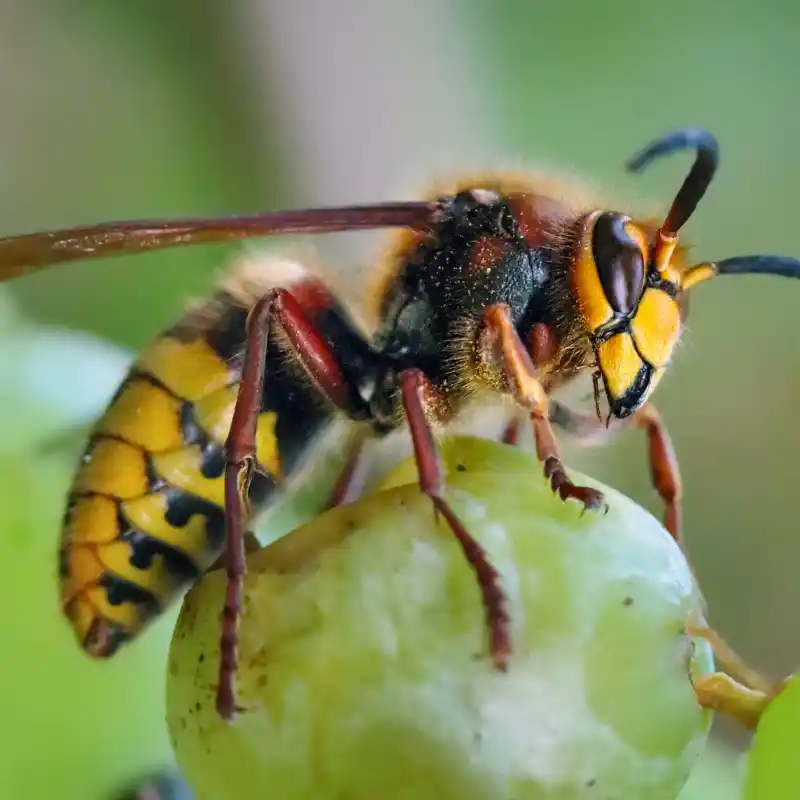
Wasps and hornets establish aggressively throughout Frederica from late spring through early fall. The Murderkill tidal marsh vegetation along the southern boundary sustains large yellow jacket ground colony populations in permanently undisturbed salt marsh and riparian vegetation directly on southern residential lot lines. Killens Pond State Park's 1,686 acres of woodland and wetland to the west add an equally undisturbed ground colony nesting environment directly against the western residential boundary. Agricultural fields on the northern and eastern approaches add field-edge ground colony pressure from the remaining directions. Frederica's historic architectural stock creates paper wasp nesting cavities in deteriorating eave sections and aging fascia boards throughout the 18th and 19th century downtown building stock.
Why Nests Keep Coming Back
Frederica is bordered on the south by tidal marsh and on the west by Killens Pond State Park. Neither is ever treated for yellow jacket nests. Ground colonies establish in tidal marsh vegetation and park boundary woodland every spring without any management disturbance. Those colonies grow to maximum aggression by midsummer — directly on the lot lines of southern and western residential properties simultaneously. Corner properties where the tidal marsh boundary meets the park boundary face aggressive yellow jacket foraging from two permanent undisturbed nesting environments at once.
Safe Nest Removal
Our wasp nest removal in Frederica team handles aerial hornet nests in tidal marsh boundary trees and Killens Pond State Park woodland edge canopy using extension pole equipment and full protective gear. Ground nests in tidal marsh vegetation and park boundary zones require nighttime dust injection. Paper wasp colonies in historic eave gaps on downtown properties receive direct nest saturation. All nest material is removed after knockdown. Same-day wasp control service is available throughout Kent County.
Seasonal Prevention
Our hornet exterminator in Frederica applies early spring preventive treatment before queens establish in tidal marsh vegetation and park boundary zones. We document every nest location treated each season to build a property-specific prevention map calibrated to your property’s position relative to both natural habitat borders.
Mosquito Control Frederica
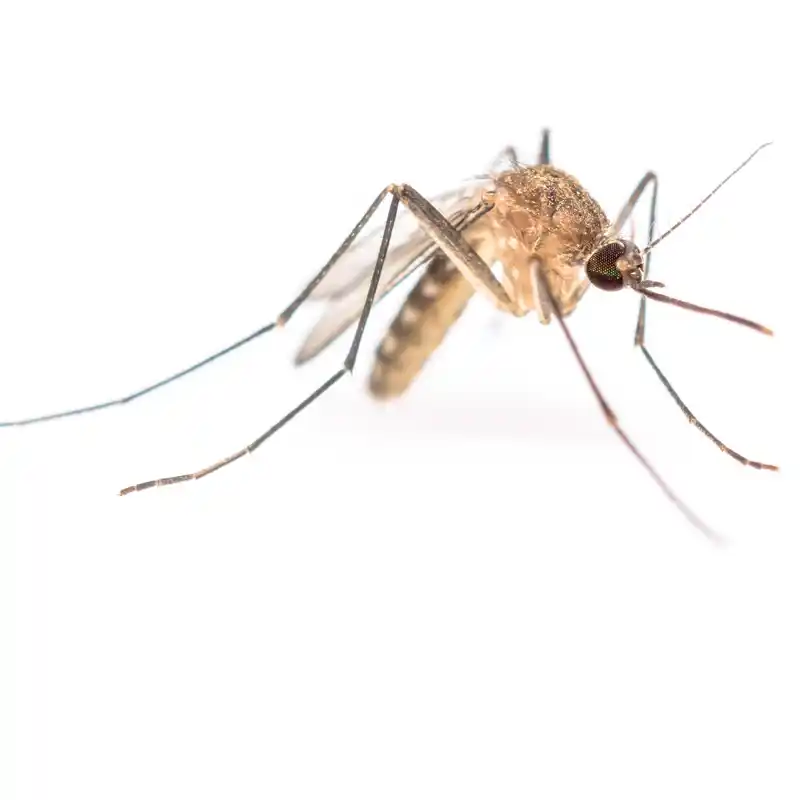
Frederica has the most officially documented mosquito problem of any town in our Delaware service area. A government report on the Murderkill River corridor explicitly names Frederica when describing salt-marsh mosquitoes breeding on several hundred acres of tidal wetlands — stating that these mosquitoes cause extreme annoyance to Frederica residents specifically. The same document notes these species can transmit encephalitis to humans and heartworms to dogs. The Murderkill River is tidally influenced all the way to Frederica, with 1,200 hectares of tidal marsh between the town and Delaware Bay generating both salt-marsh mosquito species from tidal wetland areas and freshwater mosquito species from the non-tidal freshwater wetlands simultaneously. Killens Pond State Park's millpond and wetlands to the west add a third independent freshwater mosquito emergence source from the park boundary. Agricultural drainage ditches on the northern and eastern approaches add a fourth perimeter source around the remaining town boundary.
A Government-Documented Mosquito Problem
No other Kent County community in our service area has its mosquito problem specifically named and described in official government environmental documentation. The Murderkill River Corridor Report identified Frederica by name as a community experiencing extreme mosquito annoyance from salt-marsh breeding on several hundred acres of tidal wetlands. That is not seasonal inconvenience. It is a documented, persistent, multi-species mosquito emergence from a permanent tidal marsh ecosystem that borders the town directly to the south — one that the government has been monitoring and managing for decades.
Barrier and Larvicide Treatment
Our mosquito treatment in Frederica applies high-volume barrier spray to all resting zones — Murderkill tidal marsh-adjacent southern foundation perimeter vegetation, Killens Pond State Park-adjacent western boundary residential perimeter vegetation, agricultural drainage ditch-adjacent northern and eastern perimeter vegetation, and all residential green space throughout the historic grid. Larvicide targets all standing water on the property including tidal flooding residual puddles after high-tide events. Treatments are scheduled every 21 days from late April through October.
Seasonal Protection
Our mosquito exterminator in Frederica program begins in late April when tidal marsh salt-marsh mosquito breeding activates and runs through October. We advise on drainage improvements that reduce mosquito harborage between treatment cycles on both marsh-adjacent southern properties and park boundary western properties. Given Frederica’s government-documented mosquito severity, professional treatment is a practical necessity for comfortable outdoor use in this community.
Flea & Tick Treatments Frederica
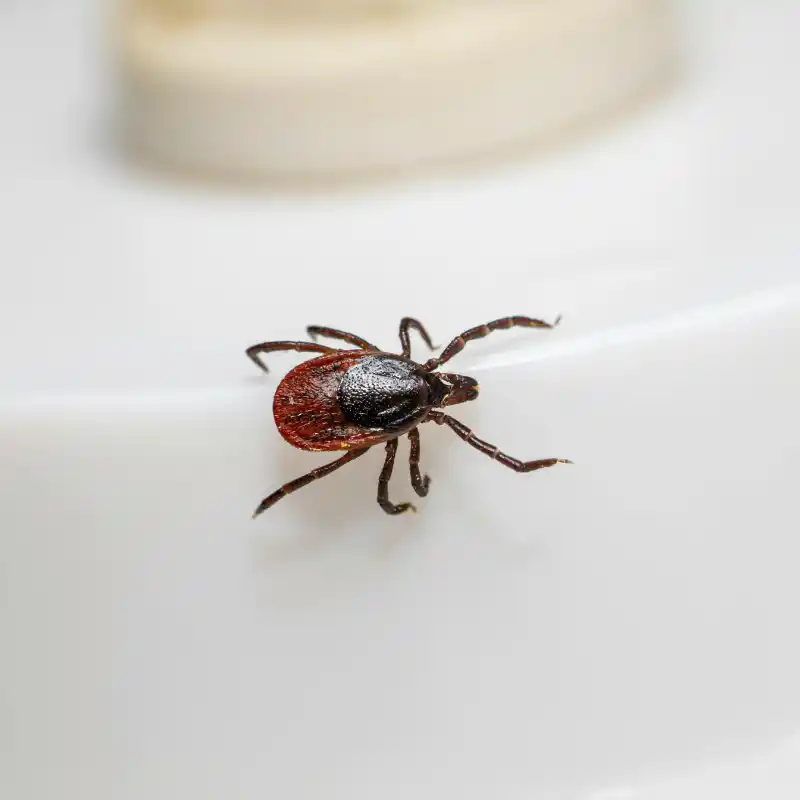
Frederica's tick exposure comes from the Murderkill tidal marsh wildlife corridor on the southern boundary and from Killens Pond State Park's wildlife habitat on the western boundary simultaneously. Deer use the Murderkill marsh corridor as a permanent travel route along the river's north bank — moving from the broader tidal marsh system into Frederica's southern residential yard perimeters during dawn and dusk feeding periods regularly. Deer from Killens Pond State Park's permanently protected 1,686-acre woodland and wetland use the park's western boundary as a daily movement corridor into Frederica's western residential streets. Both wildlife corridors operate year-round. Neither stops during winter because both the tidal marsh and the state park sustain permanent deer habitat that connects directly to Frederica's residential boundaries.
Deer From Two Permanent Habitats
Frederica’s southern tidal marsh boundary and western Killens Pond State Park boundary both sustain permanent deer populations that use residential yard perimeters as feeding corridors. Southern boundary properties face tick exposure from the Murderkill marsh wildlife corridor. Western boundary properties face it from the park woodland edge. Properties where both boundaries meet at the southwest corner face deer tick delivery from two simultaneous permanent natural habitats. Year-round tick barrier is the only effective long-term approach for properties bordering either permanent wildlife corridor.
Complete Home and Yard Treatment
Our flea and tick pest control in Frederica covers all carpet, upholstery, and pet resting areas with insecticide and growth regulator inside the home. Exterior barrier spray focuses on the full Murderkill tidal marsh boundary lawn transition edge on southern properties, the full Killens Pond State Park boundary lawn transition edge on western properties, and all unmaintained lot vegetation throughout the historic residential grid.
Long-Term Prevention
Our flea control in Frederica program identifies the specific deer movement corridors on your property. Southern tidal marsh boundary properties need year-round tick barrier along the full marsh edge. Western park boundary properties need year-round tick barrier along the full Killens Pond woodland edge. Both barriers are required year-round — deer movement from permanent tidal marsh and state park habitats never stops.
The Importance of Pest Exterminator in Frederica, DE
Frederica is Kent County's most wetland-surrounded residential community. It earned the nickname "Frogtown" from the frogs and wetlands that define its landscape — and that name appears on fire company trucks today because nothing has changed. The Murderkill tidal marsh still borders the town to the south. Killens Pond State Park still borders it to the west. Roads still flood during high tides. And official government documents still specifically name Frederica when describing extreme salt-marsh mosquito annoyance from the tidal wetlands.
This is not a community that faces pest pressure from time to time. The tidal marsh, the state park, the historic foundations, and the surrounding agricultural fields create year-round pest conditions that operate simultaneously from multiple natural and environmental sources at once.
Frederica's pest calendar follows a consistent pattern:
- March–April: Termite swarm season activates in 250-year-old tidal moisture-soaked historic crawl space foundations throughout the Frederica Historic District. Carpenter ants emerge in damp original sill plates. Mosquito season opens along the Murderkill tidal marsh ahead of every other Kent County inland community — salt-marsh mosquito breeding begins with the first warming of tidal wetlands.
- May–June: Tidal marsh salt-marsh and freshwater mosquito emergence builds from the southern boundary. Killens Pond State Park freshwater mosquito emergence builds from the western boundary. Odorous house ants push into historic kitchens as spring tidal moisture peaks. Yellow jacket queens establish in tidal marsh and park boundary vegetation simultaneously.
- July–August: Salt-marsh mosquito pressure peaks from the Murderkill tidal marsh — the documented extreme annoyance period for Frederica residents. Yellow jacket colonies reach maximum aggression in both the tidal marsh southern boundary and the Killens Pond park western boundary. Tidal flooding events continue to pressure old drain connections beneath historic downtown foundations.
- September–October: Surrounding agricultural harvest begins. Field mouse migration toward Frederica's northern and eastern residential perimeters intensifies. Tick activity peaks as harvest removes field cover. Tidal marsh and park boundary deer tick delivery continues year-round on southern and western boundary properties simultaneously.
- November–February: Post-harvest rodent pressure consolidates in historic downtown foundations. Tidal marsh corridor Norway rat pressure continues year-round. Carpenter ants stay active in persistently wet 250-year-old tidal marsh-adjacent crawl space framing through mild Kent County winters. American cockroaches consolidate in aging drain connections during winter tidal flooding events.
Delaware Pest Pros builds every Frederica treatment program around the Murderkill tidal marsh boundary, Killens Pond State Park, the Frederica Historic District's 250-year construction, and the government-documented mosquito conditions that make this "Frogtown" community unlike any other town in Kent County.
Our Proven Pest Control Process in Frederica
Step 1: Full Property Inspection
Every Frederica inspection starts with your property's specific position relative to its pest pressure sources. Southern Murderkill tidal marsh-bordering properties get tidal moisture termite and carpenter ant assessment, marsh wildlife tick corridor evaluation, and salt-marsh and freshwater mosquito emergence zone review. Western Killens Pond State Park-bordering properties get park woodland carpenter ant and wildlife assessment, park boundary tick evaluation, and park freshwater mosquito emergence review. Historic district properties get full 250-year tidal moisture crawl space and original sill plate termite inspection. All properties get tidal flooding-related American cockroach below-floor drain seal assessment given the periodic tidal surge drainage pressure documented throughout the historic grid. We never use a generic Kent County inspection checklist in Frederica's multi-source tidal and wetland pest environment.
Step 2: Targeted Treatment
Every product is selected for Frederica specifically. Termidor is calibrated for Murderkill tidal marsh moisture in historic district southern foundation soil. Dual-direction tick barrier covers both the tidal marsh southern boundary and the Killens Pond State Park western boundary on properties bordering both. Four-source mosquito barrier addresses tidal marsh, park wetland, agricultural drainage ditch, and Andrews Lake sources simultaneously. Post-tidal-flooding cockroach drain seal assessment is standard for all historic downtown properties. Pre-harvest rodent exclusion is timed to surrounding Murderkill watershed agricultural operations in September.
Step 3: Prevention at the Root
Frederica's most persistent pest problems connect directly to root conditions that surface treatment cannot resolve. Historic crawl space vapor barriers near the tidal marsh boundary need full assessment and replacement alongside termite treatment — not applied on top of inadequate moisture management. Tidal flooding drainage pathways beneath the oldest historic foundations need annual assessment to prevent American cockroach tidal surge entry. Both tidal marsh and park boundary tick barrier must run year-round because permanent wildlife habitat deer movement into residential yards never stops. Salt-marsh mosquito barrier must start in late April when tidal wetland warming activates breeding — earlier than any other Kent County inland community.
Step 4: Ongoing Monitoring
Frederica's monitoring schedule runs on the tidal calendar alongside the seasonal agricultural calendar. Termite monitoring every six months for all historic district tidal marsh-adjacent crawl space properties. Post-tidal-flooding cockroach assessment after significant high-tide flooding events throughout the year. Mosquito treatment beginning in late April when tidal marsh salt-marsh mosquito breeding activates. Year-round tick barrier on all tidal marsh and park boundary properties. Pre-harvest rodent exclusion in September. We build every schedule around your property's specific position in Frederica's tidal and wetland pest environment.

Residential Pest Control in Frederica
Delaware Pest Pros serves every residential property type in Frederica. A 250-year-old historic district property on a southern street bordering the Murderkill tidal marsh has completely different pest vulnerabilities than a newer residential property on Frederica's northern agricultural perimeter. We design programs for both.
Southern tidal marsh-bordering historic district properties get programs focused on 250-year tidal moisture termite protection, carpenter ant elimination in original sill plates and framing, post-tidal-flooding American cockroach drain assessment, year-round deer tick barrier along the full tidal marsh boundary edge, and salt-marsh and freshwater mosquito barrier from late April through October.
Western Killens Pond State Park-bordering properties get programs focused on park woodland carpenter ant and tick programs, park freshwater mosquito barrier, and park boundary yellow jacket treatment.
Northern and eastern agricultural perimeter properties get programs focused on harvest-season rodent exclusion, agricultural drainage ditch mosquito larvicide, and harvest-timed tick barrier along field edge deer movement corridors.
Our residential coverage includes every zone:
- Crawl spaces and foundations — 250-year tidal moisture termite inspection, carpenter ant historic framing treatment, tidal flooding drain seal cockroach assessment
- Kitchens and bathrooms — German and American cockroach elimination, odorous house ant control
- Exterior and grounds — tidal marsh boundary year-round tick barrier, Killens Pond park boundary year-round tick barrier, salt-marsh and freshwater mosquito barrier, tidal marsh and park boundary yellow jacket treatment, agricultural perimeter rodent exclusion
Commercial Pest Control in Frederica
Frederica's commercial activity connects along Frederica Road and Delaware Route 12, with DE 1's interchange providing access to regional traffic at both the South Frederica and North Frederica exits. Food businesses, service establishments, and operations serving the Frederica and broader Lake Forest School District community face real pest consequences in a tidal marsh and agricultural environment.
We serve food businesses along Frederica Road and the DE 12 corridor, service operations near the DE 1 interchanges, multi-unit rental properties throughout the historic downtown, and Lake Forest School District school facilities serving Frederica students.
Our commercial services include:
- Food businesses and restaurants — German cockroach elimination and rodent control with full HACCP documentation
- Historic downtown rental properties — coordinated bed bug multi-unit inspection and between-tenancy monitoring
- DE 1 interchange area businesses — perimeter pest protection and seasonal treatment programs
- School facilities — child-safe treatment protocols with full documentation

Why Choose Our Pest Control in Frederica, DE
Frederica requires pest control expertise that understands what makes this tidal river community unlike any other Kent County town. The Murderkill River's tidal influence reaches all the way to Frederica. Salt-marsh mosquitoes breeding on several hundred acres of tidal wetlands are specifically named in official government documents as causing extreme annoyance to Frederica residents. The town earned the nickname "Frogtown" generations ago — and nothing about its wetland character has changed. Roads still flood at high tide. Two hundred and fifty year old historic district foundations still sit on tidally influenced soil.
Delaware Pest Pros knows that termite monitoring in Frederica's historic district needs to account for tidal moisture cycling — not just seasonal rainfall patterns. We know that mosquito treatment here must begin earlier in spring and must address salt-marsh tidal species that inland communities simply do not face. We know that American cockroach control in the historic downtown requires post-tidal-flooding drain assessment — not just standard interior treatment. We know that tick barrier on southern tidal marsh boundary and western park boundary properties must run year-round because the permanent wildlife corridors on both sides never stop.
That specific Frederica knowledge is what this community needs. That is what we deliver.
Licensed & Certified Technicians — state-licensed exterminators serving Kent and New Castle Counties
Same-Day & Emergency Service — fast response when you need it most
Eco-Friendly Pest Control — EPA-approved, low-toxicity treatments safe for children, pets, and the environment
- Affordable Pest Control in Wilmington — transparent pricing with no hidden fees
- Guaranteed Results — we return at no extra charge if pests come back between visits.
Integrated Pest Management (IPM) — we eliminate pests and the conditions enabling them.
Local Expertise — genuine knowledge of Frederica's Murderkill tidal marsh boundary, Killens Pond State Park, 250-year historic district construction, and government-documented salt-marsh mosquito conditions.
With Reliable Pest Control Frederica
, you can rest assured that your home or business is protected by a professional team that genuinely cares.
Delaware Pest Pros serves all Frederica, DE neighborhoods and surrounding communities.
Our service area covers all of Kent County. We serve properties near the Murderkill River tidal marsh, Killens Pond State Park, Andrews Lake, Delaware Route 1, and Delaware Route 12 throughout the Frederica area. Nearby Cities We Also Serve:
Customer Testimonials from Frederica
Don't just take our word for it — here's what Frederica homeowners and business owners are saying about Delaware Pest Pros:
Frederica Historic District, Frederica DE (19946)
We live in the Frederica Historic District near the tidal marsh boundary and had termites active in our original crawl space sill plates. Delaware Pest Pros immediately understood that our foundation has been absorbing tidal moisture for over 200 years and calibrated their treatment for those specific conditions. Two clean monitoring visits confirmed complete elimination. Nobody else in Kent County understood the tidal moisture dynamic the way they did. Best pest control in Frederica.

Murderkill River Marsh Border Communities, Frederica DE (19946)
The mosquitoes from the Murderkill marsh are a different level than anything we experienced before moving here. Delaware Pest Pros explained that the tidal wetlands specifically produce salt-marsh mosquito species that are documented in government records as causing extreme annoyance to Frederica residents — it's not just normal backyard mosquitoes. Their treatment program addressed both the tidal marsh species and the freshwater park sources at the same time. First usable outdoor season since we bought the house. Best pest control in Frederica.
Frederica Historic District, Frederica DE (19946)
After every high-tide flooding event we would get American cockroaches appearing in our kitchen. Delaware Pest Pros explained the tidal surge pressure on old drain pipes beneath our historic downtown foundation — something no other company had ever mentioned. They sealed the drain connections and treated below the floor. No cockroaches after the next three flooding events. A truly trusted exterminator in Frederica.
Call Today for Pest Control in Frederica, DE
Pests don’t wait. Neither should you. Delaware Pest Pros is Frederica’s most trusted local exterminator in Frederica. We respond the same day you call.
Our pest control in Frederica, DE is backed by a full satisfaction guarantee. If pests return between visits, we come back at no extra charge. We serve every neighborhood — from 250-year-old historic district properties on the Murderkill tidal marsh boundary to newer residential homes on Frederica’s northern and eastern agricultural perimeter.
Don’t let a pest problem become a property crisis. Call your local exterminator in Frederica today.
Same-Day Service. Guaranteed Results. Local Experts You Can Trust.
Frequently Asked Questions About Pest Control in Frederica
1. What does pest control cost in Frederica, DE?
Cost depends on pest type, property size, and your property's position relative to Frederica's pest pressure sources. Historic district tidal marsh-adjacent crawl space properties require more comprehensive termite and moisture assessment than standard inland programs. Tidal marsh boundary properties require year-round tick barrier programs and multi-source mosquito treatment. A one-time general treatment ranges from $150–$300. Termite and bed bug services are priced by property size after a free inspection. Transparent quotes before any work begins. No hidden fees.
2. How often should pest control be done in Frederica?
Quarterly service is the minimum for most Frederica properties. Historic district crawl space foundation properties near the tidal marsh boundary need six-month termite monitoring given 250-year tidal moisture accumulation in original sill plates. Tidal marsh and Killens Pond park boundary properties need year-round tick barrier. Mosquito treatment should begin in late April when tidal wetland salt-marsh mosquito breeding activates — earlier than most Kent County communities — and continue through October.
3. Are your treatments safe for pets and kids?
Yes. Every product is EPA-approved and selected for low toxicity. We are especially careful near Frederica's Murderkill tidal marsh environment and Killens Pond State Park boundary. Re-entry guidance is provided after every treatment and we answer every product question before we apply anything.
4. Do you offer same-day emergency pest control in Frederica?
Yes. We maintain same-day availability throughout Frederica and all of Kent County. Tidal marsh boundary yellow jacket emergencies, post-tidal-flooding cockroach events, and harvest-season rodent migration situations all qualify for same-day response. Call before noon and a licensed technician arrives the same day in most cases.
5. Which pests are most common in Frederica, DE?
Frederica's most significant pressures are salt-marsh and freshwater mosquitoes from the Murderkill tidal wetlands — specifically documented in government reports as causing extreme annoyance to Frederica residents — subterranean termites in 250-year tidal moisture-soaked historic district crawl space foundations, American cockroaches displaced by tidal flooding surge through deteriorated historic drain connections, black-legged ticks from deer using both the tidal marsh southern boundary and Killens Pond State Park western boundary as year-round wildlife corridors, and Norway rats from the Murderkill marsh riparian corridor combined with harvest-season field mouse migration from surrounding agricultural fields.